Why Gaming’s Future Doesn’t Belong to the Loudest Launch, But to the Strongest Community
What the 2025 PC & Console Report tells us about surviving and thriving in a crowded, flat market.
By Wouter Sleijffers
The hard truth: player growth has stalled.
Player growth is slowing. Playtime is consolidating. New games are being launched into the void, while legacy titles continue to dominate player attention. According to Newzoo’s 2025 PC & Console Gaming Report, only 12% of total playtime is spent on new releases, down from 17% in 2022.
The vast majority (88%) goes to long established titles with massive cultural capital. In fact, the top 10 games now account for over 50% of all playtime.
Here’s the insight: the winners in this zero-sum attention economy aren’t winning on gameplay alone. They’re winning on community.
In a world of content abundance, the only thing that truly scales is not just mindless consumption, but real participation. And participation originates from the community.
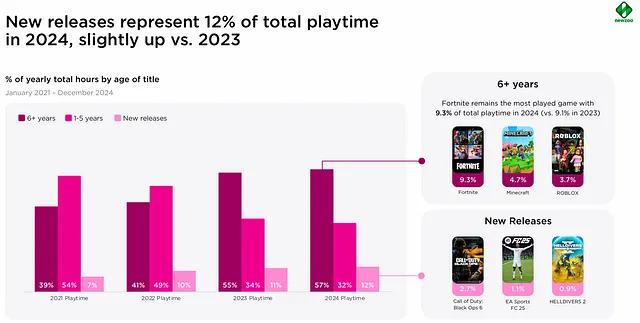
Source: Newzoo The PC and Console Report 2025; new releases represent 12% of total playtime in 2024.
What’s Going On?
The 2025 Newzoo report paints a deeper picture:
Players are engaging with fewer games overall. The average PC gamer played only 3.2 unique titles in 2024, down from 4.1 in 2022.
Legacy titles that heavily involve community like Fortnite, GTA V, and Minecraft remain top performers across all tracked territories.
Discoverability is down. Steam’s algorithmic exposure is declining in effectiveness, and community-driven platforms like Discord and Reddit are now more influential in discovery.
New releases are struggling to retain players post-launch.
Meanwhile, community-driven titles are thriving. Players don’t just play these games, they live in them, create for them, and organize around them. These games succeed not because they had the loudest launch, but because they built spaces that mattered to people.
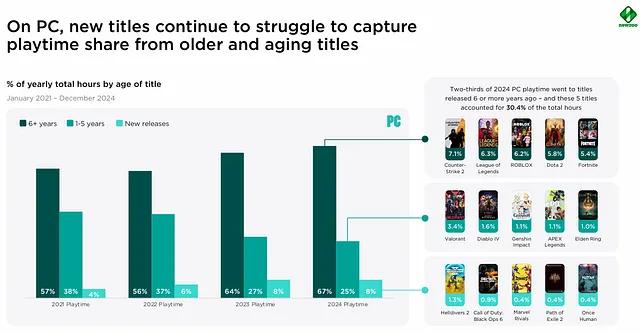
Source: Newzoo The PC and Console Report 2025; on PC, new titles continue to struggle to capture playtime share from older and ageing titles.
Why (some) Studios Are Stuck
For most studios, especially those working on live-service or multiplayer titles, the current landscape is unforgiving:
Marketing costs are rising. Player acquisition costs rose 28% year-over-year.
User acquisition is less efficient.
Traditional influencer strategies deliver short-term spikes, not sustained growth.
Community teams are often reactive, underfunded, or siloed.
The result: many games launch with initial buzz but fade fast and some studios are forced to close shortly after launch. Less than 1 in 5 live-service launches in 2024 maintained positive MAU growth after 90 days. Without a sustained community, there’s no cultural glue to hold player interest. No shared identity. No reason to return.
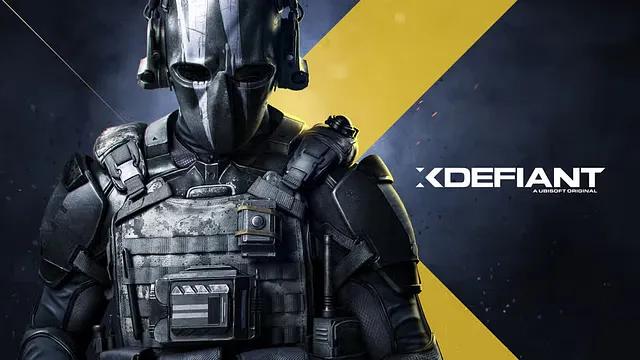
Source: Ubisoft; XDefiant was a game that launched May 2024 after which it was announced that it would close down only months after its release.
What Community Can Do That Marketing Can’t
Communities do what no algorithm or ad impression can:
They generate word-of-mouth that spreads through trust.
They build social stickiness that makes games part of a player’s identity.
They create (often free) content, mods, events, memes, and rituals.
They turn players into participants and participants into advocates.
According to Newzoo: “Games with high community engagement as measured by Discord activity, modding, and player-created content showed significantly longer tail engagement.”
Another insight: “The most successful legacy games all exhibit social utility, meaning they’re not just games, but places to gather, share, and create.”
ELO sees this as more than engagement. It’s empowerment.
What ELO Believes
We believe that gaming communities drive culture and innovation. And when that belief is put into practice early in a game’s lifecycle, it becomes a growth foundation and strategy that also amplifies traditional user acquisition tactics.
At ELO, we work with studios to create community orchestrated experiences. This means that community empowerment does not originate with luck, but by design.
ELO works with studios to:
Craft out-of-game experiences rooted in competition, creativity, storytelling, and rewards.
Develop tailored community strategies that bridge pre-launch, launch, and live phases.
Unlock participation by creating meaning around the game, not just within it.
Whether indie or AAA, our approach scales with ambition. We don’t offer just ‘community management’. We build cultural foundations that last.
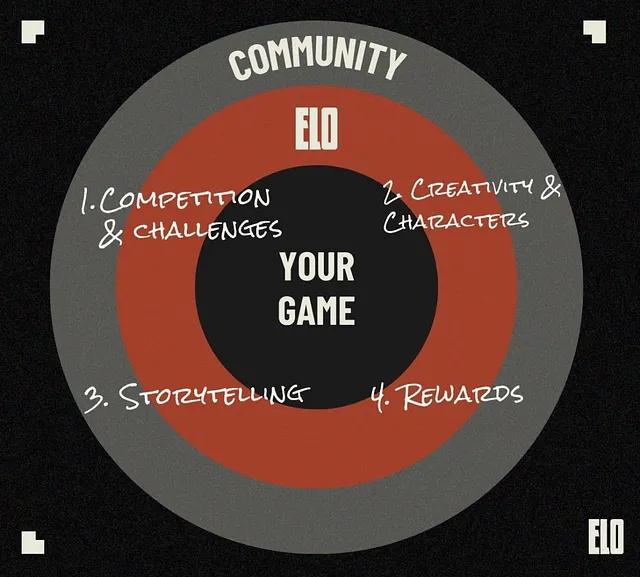
Source: ELO; 4 levers of community empowerment
Where Studios Can Start
Here are 4 ways to start shifting from marketing-led to community-powered:
Build community before launch, not after.
Give players creative tools and a narrative voice.
Invest in cultural moments, not just content drops.
Treat community as a design layer, not a PR function.
Newzoo summarises it best: “Studios must now design for community amplification — thinking beyond in-game loops to out-of-game presence, ownership, and co-creation.”
Growth in gaming isn’t over. But it’s no longer about scale alone.
In a flat market, attention is scarce. But belief? Belonging? Momentum? That scales when you put the community at the centre.
We couldn’t have said it better…
#PowerToTheGamer.