Community Critical Mass: When Your Community Carries Your Game
Some games launch loudly and fade quietly. Others appear almost out of nowhere and go on to shape culture, live for years, and build communities that feel more like a virtual town square with villagers and neighbours than audiences.
By Wouter Sleijffers
The difference isn't the budget and not even always the gameplay itself. The difference is the community and the concept of, as we call in at ELO, reaching Community Critical Mass.
We believe that the future of sustainable game success does not belong to those who shout the loudest about their game, spend the most on their game, or create the most content.
It belongs to the studios that pay most attention to empowering their community to carry the game further than any user acquisition strategy ever could.
This is the power of Community Critical Mass and it’s the product of Community Empowerment.
Power To The Gamer = Empowering Your Community. Source: ELO
What Is Critical Mass? And Why It Matters in Gaming.
In physics, critical mass is the point at which a chain reaction becomes self-sustaining. After that point, the reaction no longer relies on external input. It fuels itself. In social sciences, critical mass is the term used to describe a tipping point where widespread adoption of an innovation or idea becomes self-sustaining.
In social systems, economics, culture, and yes, gaming too, the principle is the same: a network reaches critical mass when participation naturally attracts more participation.
The "Critical Mass" Theory [Markus, 1990] states that success of an interactive medium depends on its diffusion among the user community. If a threshold is not reached, the medium will fail, but once it is reached, its growth becomes self-sustaining.
So, once critical mass reaches a tipping point, the messaging apps, social networks, operating systems, fandom no longer relies on constant external force. It becomes self-propelling
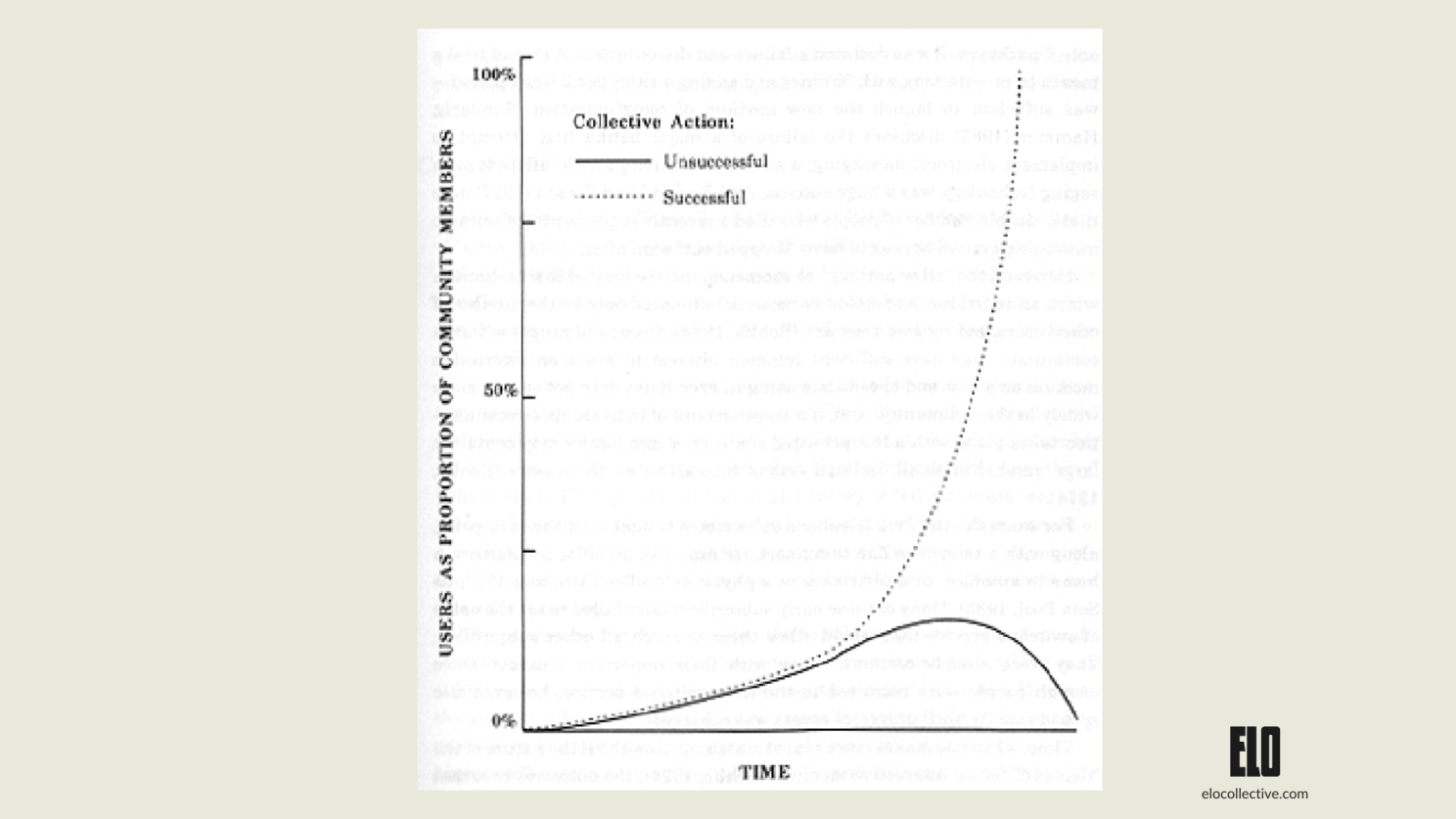
The Critical Mass Theory applied to Social Systems (Communities). Source: ResearchGate.com
What Is Community Critical Mass in Gaming?
At ELO we help game creators getting to Community Critical Mass for games (and the same applies to any marketplaces, brands etc.).
In gaming, we usually talk about (leaky) marketing funnels, user acquisition, retention curves, and paid reach. We target audiences and measure consumption. However, most successful games of the last two decades, the ones with longevity, cultural relevance, and multi-generational communities almost all operate on community critical mass.
Focusing on traditional user acquisition (expensive!) and content creators (expensive!) alone, will more likely not give you the momentum to reach Community Critical Mass.
Community Critical Mass is not an algorithm, an arbitrary number or budget equation. It also does not just happen by itself, you need to empower your community (create catalysts) to create this wonder of growth. Community Critical Mass is the point where a game’s culture and innovation sustain by the community and expand themselves through the community and smart marketing with minimal external effort from the developer or publisher.
You kind of know when you’ve reached Community Critical Mass when, for example:
Players don’t just consume (play) the game, they create a culture, become participants, creators and contributors.
(New) players join because the community becomes the discovery and engagement engine, not the advert.
Engagement becomes socially reinforced through all kinds of channels.
Content, competition, creativity, innovation, and social rewards (meaning) emerge from the empowered players, not the studio heads.
The game becomes a place, not a product or platform.
Community empowerment fuels more participation. Yet what are the catalysts to create? These are things like:
Identity: communities thrive when players feel part of something bigger such as a fandom, a clan, a meme culture, a social language.
Participation loops: Players contribute to the community (UGC, tournaments, mods, cosplay, streams), reinforcing its value.
Rituals: Weekly events, seasonal traditions, inside jokes, fan challenges. All of these give the community rhythm.
Social Glue: The strongest retention mechanic ever is friendship.
Importantly, it’s about empowering your community, not just managing your community. This is how games transform from entertainment into ecosystems, and from products into playgrounds.
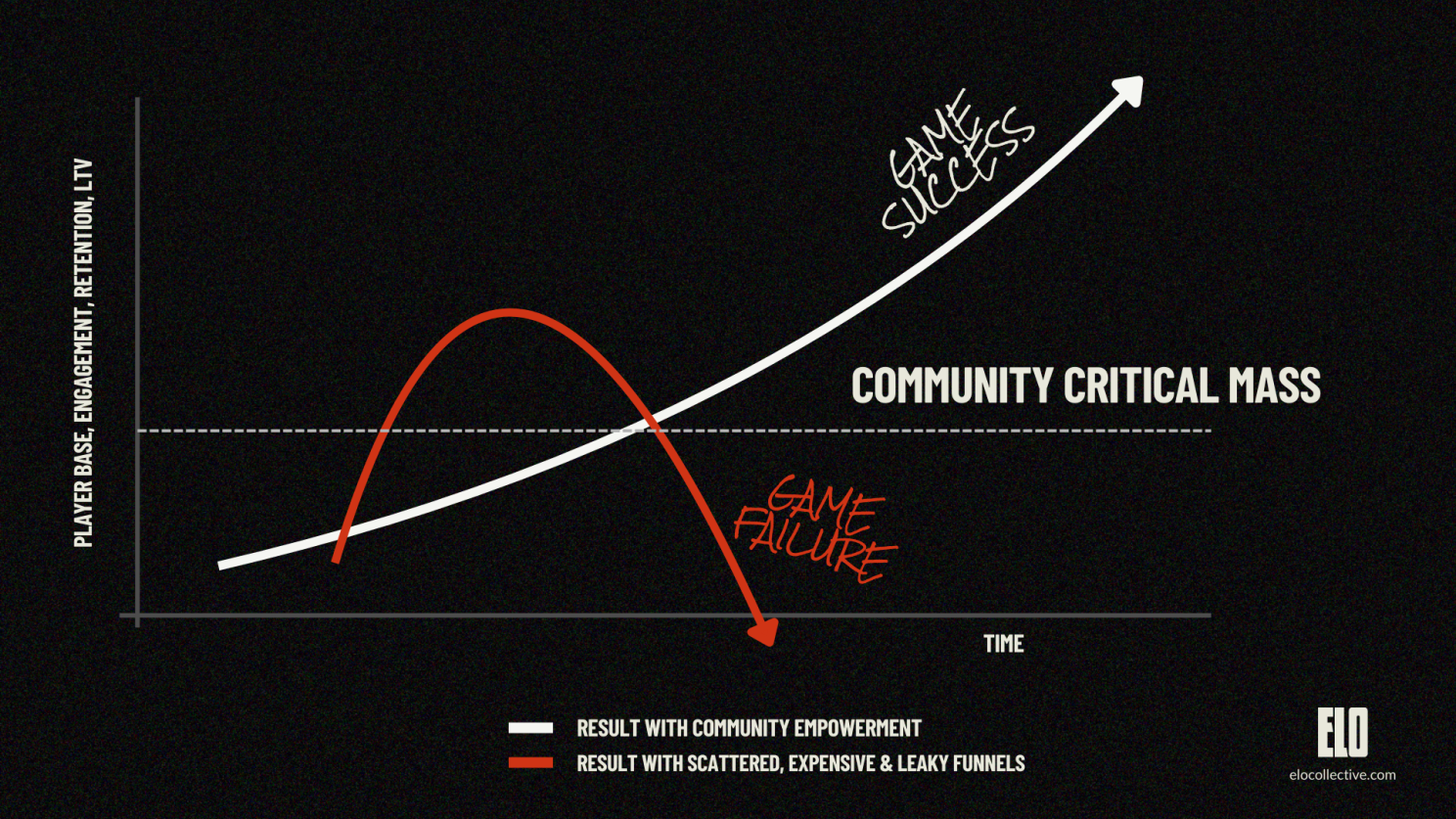
Community Critical Mass through Commumity Empowerment. Source: ELO
Among Us: A Quiet Game That Became a Global Phenomenon
Fortnite and Roblox are of course go-to examples for games (social platforms) that reached Community Critical Mass beyond any measures. Some of the world’s most beloved communities started quietly, such as was the case with Among Us.
Among Us is an excellent case study because it became a global cultural phenomenon not due to production value or marketing, but because the design of the game naturally empowers community that enabled competition, lore, creativity, and social rewards, both inside and outside the game.
Innersloth released Among Us in 2018, and for two years, it remained largely unnoticed. It had:
No major publisher
No big marketing budget
Minimal post-launch hype
Simple mechanics and modest visuals
Without any significant marketing budget (at all), it exploded because of an empowered community. Somewhere in 2020, creators on Twitch and YouTube discovered the game’s potential for storytelling, deception, humour, and social chaos. It wasn’t the gameplay alone that made it spread; it was what the community created:
New game modes
Community rituals
Personalities and character memes
Community jokes (“sus”)
Massive cross-platform viewing moments
This was the tipping point: participation created more participation. The game hit critical mass because it activated all the Community Critical Mass components. And here’s the most important part: After it reached critical mass, Among Us didn’t need any user acquisition budgets.
The community carried the game.
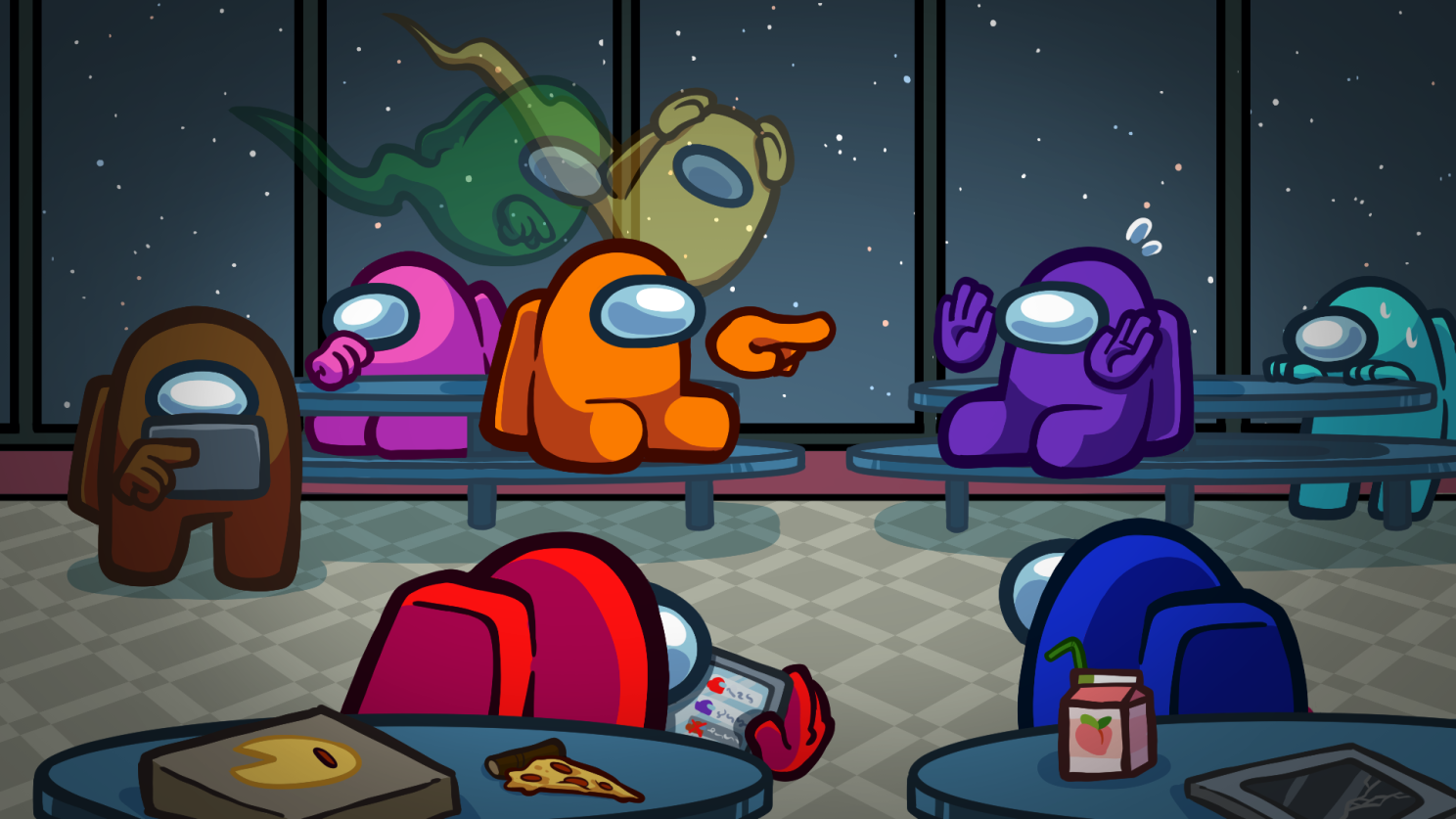
Among Us: Reaching Community Critical Mass
Why Community Critical Mass Outperforms User Acquisition Models
Most studios still rely heavily on agencies that do user acquisition through ads, influencer campaigns, and paid boosts. And that’s ok, these bring players in, but in reality they rarely keep them. What if the real reason to join and stay is not just the game, but the community.
A Critical Mass Community strategy outperforms User Acquisition heavy strategies (or rather, with a community critical mass strategy, user acquisition provides less return) because:
Once critical mass is reached, growth is driven by sustainable, authentic and organic growth. Word-of-mouth, organic creators, community events and cultural relevance. Players return for things that are not always captured in the game. Friends, belonging, rituals and the identity attached to the game.
The burden on the studio decreases while engagement rises, such as a reduced dependence on content drops. The same goes for competitive challenges, creatitivty, etc. Communities generate their own content such as memes, fan art, tournaments, mods, lore theories.Acquisition costs drop dramatically because the community drives discovery.
Games with Community Critical Mass see increased IP Equity, evolving into brands, worlds and universes, platforms, and transmedia opportunities.
Games with strong communities survive competition, algorithm changes, shifting trends, and even periods of slow development giving them superior market resilience. This is why some games last 10+ years while others fade in 10 weeks.
How Studios Can Build Community Critical Mass The ELO way
ELO’s work is rooted in one core belief: Gaming communities drive culture and innovation. And we believe that studios that embrace this will build the most enduring games of the next decade.
To help studios reach Community Critical Mass, ELO focuses on **out-of-game experiences **built on the four universal reasons why people love games:
Storytelling
Creativity
Competition & Challenges
(Social) Rewards
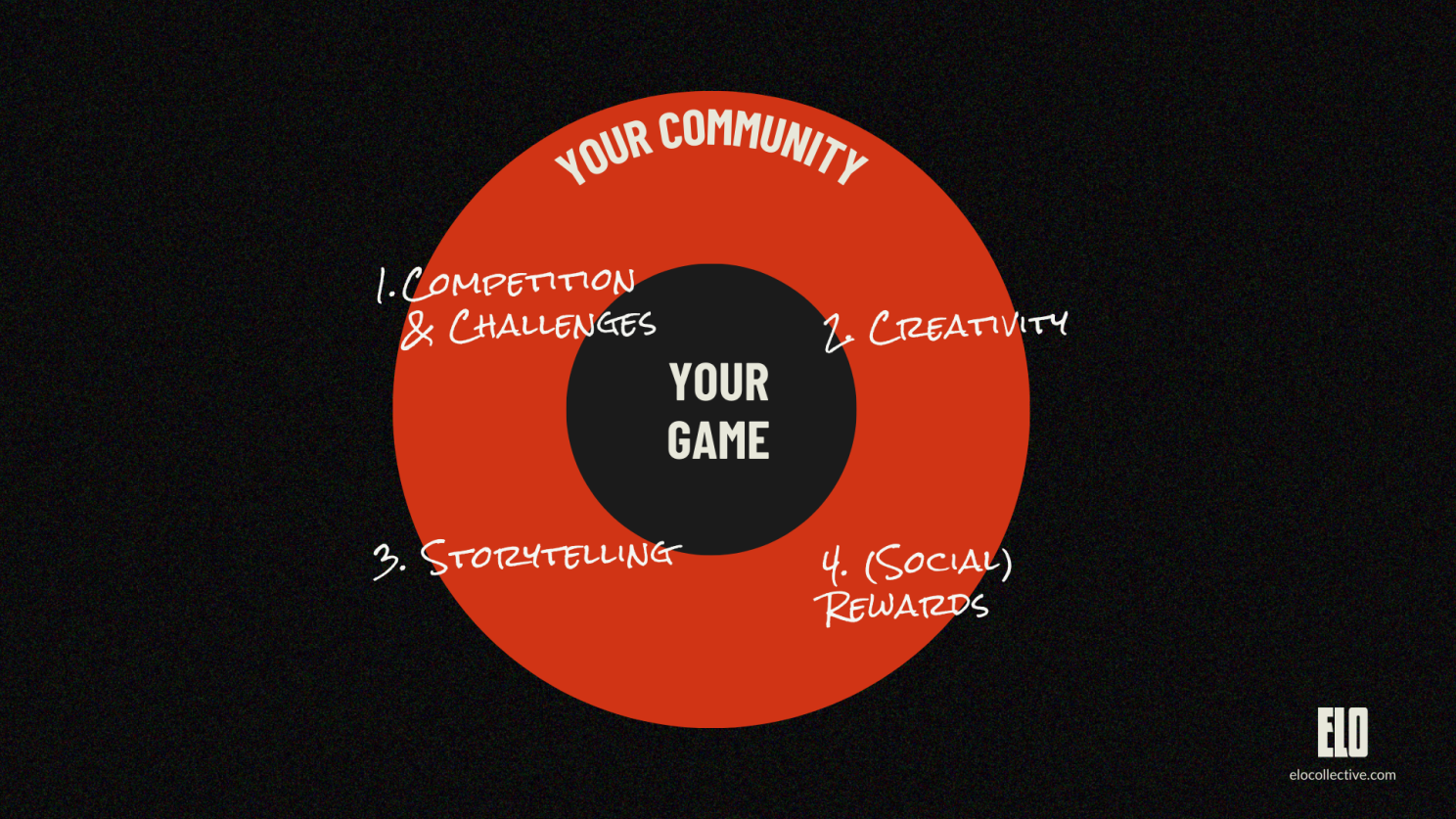
Why a Community Loves Your Game. Source: ELO
These are some of humanity’s oldest engagement drivers and gaming communities amplify them. They create identity, participation loops, purpose & belonging, and importantly: a whole lot of fun!
The next era of gaming won’t be defined by the biggest budgets or the most aggressive marketing. It will be defined by the games that build belonging, participation, and identity. The winners will be the games that reach the tipping point where community becomes the engine not the outcome. That is Community Critical Mass.
And that is why ELO believes so strongly in this one idea: Power to the Gamer.
Empower your gaming community, and the community will carry your game.
If you made it this far, check outagency.elocollective.comto find out more how we can empower your community!