Community Champions: HaZ Dulull
The ELO Community Champions series celebrates the founders, creators, and innovators who didn't just build an audience. They built with their community. Not only did they take the helm of taking a community forward, they went above and beyond and suddenly found themselves in a bu
By Wouter Sleijffers
This is the story of HaZ Dulull, founder of Beyond The Pixels, whose debut game Astro Burn enters Early Access this week.
HaZ (short for Hasraf) is a British director (with a visual effects background) and transmedia creator whose work spans feature film, TV, animation and games. His films The Beyond and 2036: Origin Unknown raised his profile as a hands-on sci-fi director, and he’s since championed real-time production techniques and virtual production workflows in both film and animation.
In 2025 he launched Beyond The Pixels, grew a creator channel to 100k+ subscribers, and is developing his debut game Astro Burn alongside early transmedia plans.
In this interview, we explore how HaZ entered the industry, the journey that led him to founding Beyond The Pixels, and the vision shaping the studio’s future. We also dive into his relationship with the community, how he invites them into the creative process, and what makes his approach fundamentally different from more established studios.
This is the story of a creator who never stopped experimenting, and a studio built on the idea that the best worlds are the ones crafted alongside the community.
Early Beginnings
It was 1am. The Deadline Was Tomorrow. Someone Suggested Half-Life.
In 2007, a visual effects team at MPC was running 24-hour production cycles on Roland Emmerich's 10,000 BC. The studio wasn't going to delay the release. So HaZ Dulull volunteered to be part of the night shift. 8pm to 7am, sixteen artists, mountains of mammoth shots to finish.
Around 1am, someone gave a quiet nod. Half-Life got installed on the server. And for a few hours every night, a group of artists who barely knew each other became a community.
"You'd know someone because they were the one always getting you with the crowbar," HaZ recalls. "We built a friendship during a time when working visual effects at night is not the nicest thing. But for some reason we were all excited to come in. Because it was going to be Half-Life at 1am."
He didn't have a word for it then. But looking back, he knows exactly what it was.
"That was my first real experience of modern community. Gaming was more than blasting things or getting a high score. It was about bringing people together."
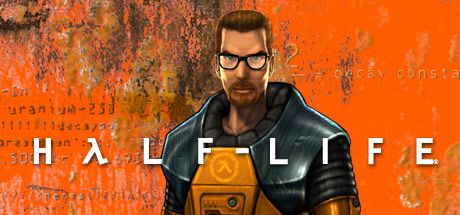
Half-Life gave birth to many things, including HaZ' love for community.
Before Beyond The Pixels
Before Beyond The Pixels, There Was Everything Else
HaZ's path to founding a game studio took in cinematics at Codemasters, VFX compositing on hollywood movies, previs work on the Dark Knight at Pinewood, a short film he directed and produced called Project Kronos that went viral on Vimeo, two feature films, a Disney TV show, and three and a half years as cinematics director on Dune: Awakening.
"I couldn't go to film school," he says. "So my film school was doing previs on The Dark Knight. I learned about cameras, composition, framing, storytelling, getting notes from executives, working fast, communicating succinctly."
Games were always there in the background; a Game Boy on set during breaks, a laptop in the hotel room, a reference in the director's notes. When the pandemic hit and HaZ started experimenting with Unreal Engine, the two halves of his career finally snapped together.
"I found a way of bringing my love of film and my experience in games together. And then I got asked to be cinematics director on Dune: Awakening. That became my big AAA experience. And afterwards, I really wanted to do something smaller. But figure out all the issues we have in the industry."
Those issues were not hard to see. Studios laying off thousands. Games taking eight years and hundreds of millions to make, then getting cancelled. An industry in which the economics of creation had broken away from the joy of it.
"Why don't we just go back to when games were simpler? In college I used to make little Doom mods and Quake mods on floppy disks and share them around. That was community back then. Someone gets the disk, plays it, talks about it in the playground. I missed that simplicity."
Beyond The Pixels was born in mid-2024. Its founding logic was deliberately unglamorous: make something smaller, bolder, and built with the people who are going to play it.
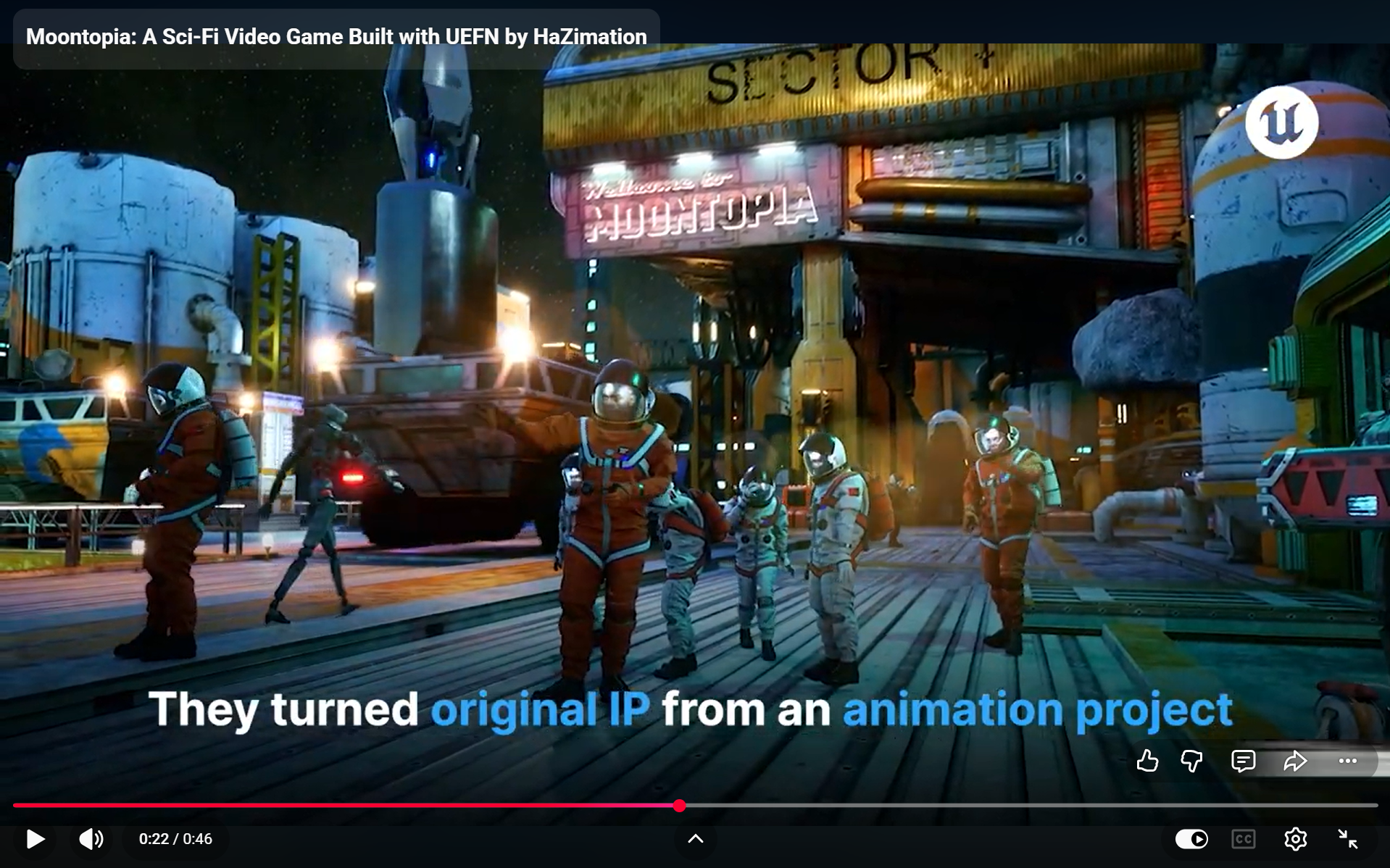
*In 2024 HaZ and his team launched Moontopia, a free to play, cinematic action-adventure sci-fi shooter using UEFN. Unique for that time, and featured by Unreal Engine. *
Making a Game
The Cat Was Not the Plan
The game that became Astro Burn started as a personal project; a science fiction shooter HaZ could build largely alone, with mechanics simple enough to code himself. He knew it was going to be space-based. He started playing his old Super Nintendo collection and remembered how addictive R-Type and UN Squadron were. Moving a ship up and down and firing bullets. That was enough.
Then his cat, Mia, walked across his desk and looked at his phone while Siri was talking. "Cats in space, that's kind of cool. Cats are memeable. That's my marketing hat on."
He did some research and found that the French space agency had actually sent a Parisian cat into space in 1963. She died. Nobody made a big deal of it. "Celebrate the cats," HaZ decided.
What happened next was not planned. He started posting clips on LinkedIn and social: a little spaceship here, a character sketch there. People responded. They started suggesting things. The feedback loops opened naturally before he had even thought of them as feedback loops.
"I didn't say 'I'm involving the community from day one.' It was just natural. I want to share what I'm doing. And people started going, lean into the cat stuff. That was the thing I kept getting told. Lean into the cat stuff."
The moment that sharpened his thinking came at a Twitch event. Content creators and influencers kept gravitating to his booth. Not for the shooter mechanics, but because there was a cute cat on the screen. The moment they picked up the controller and encountered a bullet-hell spaceship, they put it down.
HaZ was not offended. He was curious.
"I asked them: tell me more. And they said, I thought it was a cute, cosy game. And I thought: I want to make something playable by everyone, but without diluting my vision. So I went back to the community and asked."
The answer was consistent: more cat, less sharp edges. The game evolved from bullet-hell shooter into what HaZ describes (accurately, it turns out) as a cute-em-up: a genuine genre from Konami's mid-90s catalogue, games like Parodius, that never got its moment because streaming, influencers, and meme culture didn't exist yet.
"Cute-em-up may not have been popular back then. But it sure as hell will be popular today."
He built a simple metric for processing community input. One person dislikes the colour of the cat? Subjective taste, move on. Five or more people flag the same mechanic? That needs looking at. It sounds obvious. Most studios, even large ones, don't do it.
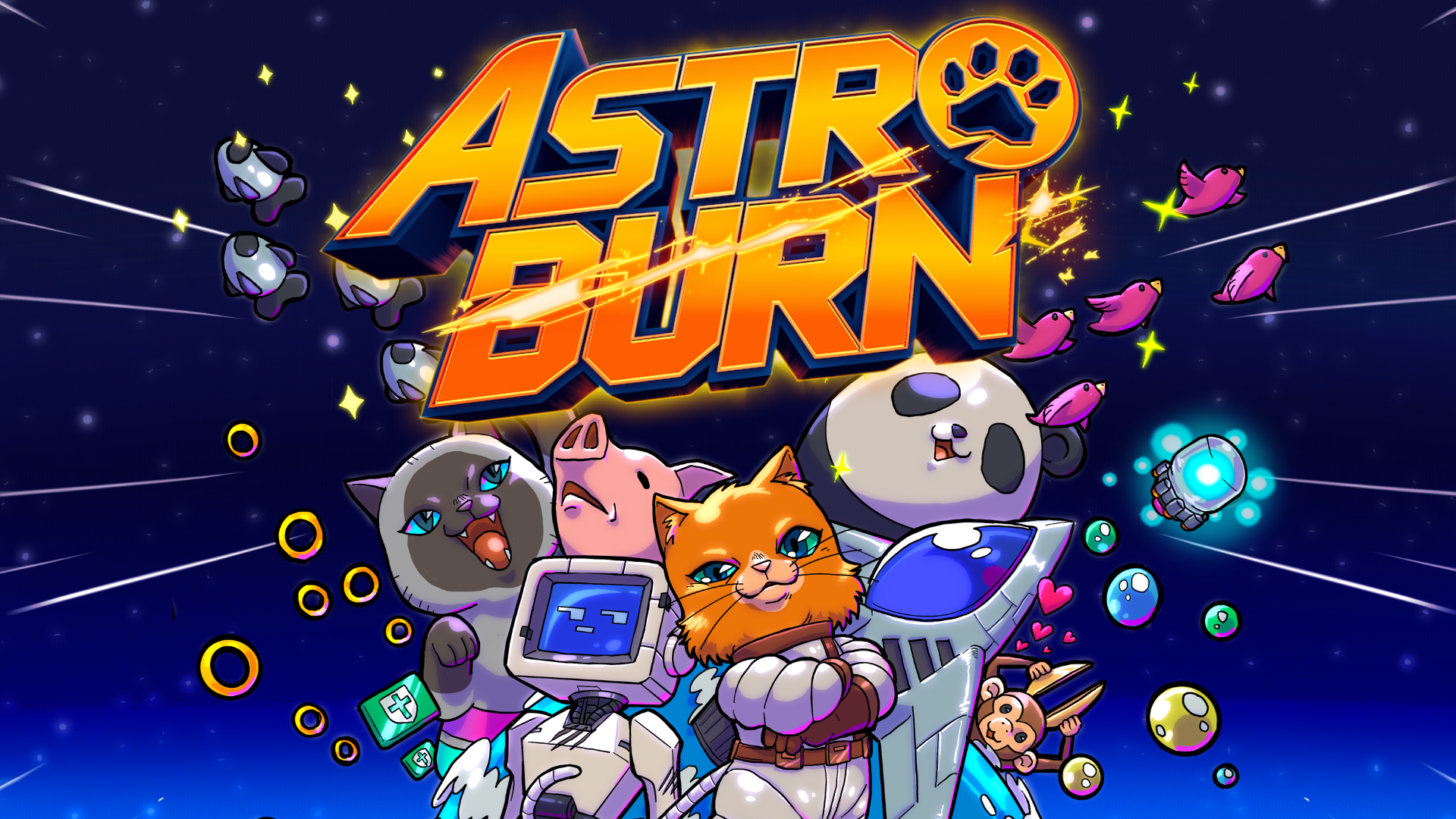
Astro Burn is now available on Steam for PC and Mac users, and will also be available across console and mobile (tba)
He built a simple metric for processing community input. One person dislikes the colour of the cat? Subjective taste, move on. Five or more people flag the same mechanic? That needs looking at. It sounds obvious. Most studios, even large ones, don't do it.
Minimize imageEdit imageDelete image
The Studio that builds once and use multiple times
Beyond The Pixels is not just a game studio. That is a deliberate strategic choice, not a branding decision.
"We build IP with gaming front and centre, but there is always an additional vertical such as TV, animation, film, comics. And we build all our assets from day one to accommodate all those verticals. We don't build the game first and then rebuild for the TV show."
The animated Astro Burn series was announced in Deadline before the game had even launched its first public demo. The writing for the show feeds into the game, and the game feeds back into the show. The intent is that by the time the series starts releasing episodes, the game is still in people's heads.
"If you release something within a year of the game, people remember. If you wait four years, investors say no and distributors say they don't remember the game."
Community runs through the television side of this model too. Something almost unheard of in traditional film and TV production, where a screen test with thirty people and a scorecard is considered audience engagement.
"Film and TV does not engage community from day one. But with us, what we write for the TV show goes into the game, and everything from the game goes into the show. If something resonates with the community in the game, it informs the series."
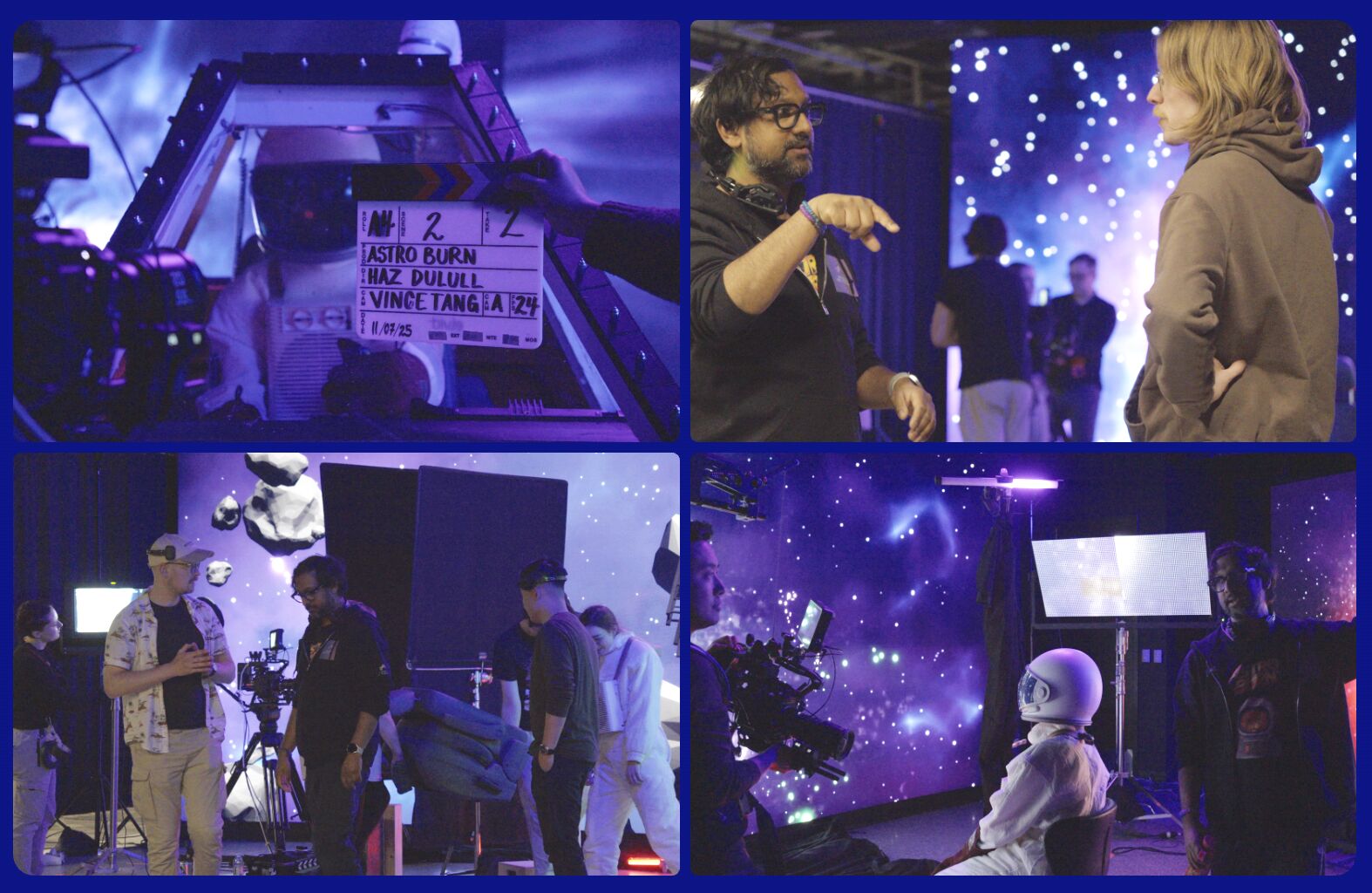
Astro Burn is more than a game; behind-the-scene footage of the series production.
He built a simple metric for processing community input. One person dislikes the colour of the cat? Subjective taste, move on. Five or more people flag the same mechanic? That needs looking at. It sounds obvious. Most studios, even large ones, don't do it.
Minimize imageEdit imageDelete image
The Studio that builds once and use multiple times
Beyond The Pixels is not just a game studio. That is a deliberate strategic choice, not a branding decision.
"We build IP with gaming front and centre, but there is always an additional vertical such as TV, animation, film, comics. And we build all our assets from day one to accommodate all those verticals. We don't build the game first and then rebuild for the TV show."
The animated Astro Burn series was announced in Deadline before the game had even launched its first public demo. The writing for the show feeds into the game, and the game feeds back into the show. The intent is that by the time the series starts releasing episodes, the game is still in people's heads.
"If you release something within a year of the game, people remember. If you wait four years, investors say no and distributors say they don't remember the game."
Community runs through the television side of this model too. Something almost unheard of in traditional film and TV production, where a screen test with thirty people and a scorecard is considered audience engagement.
"Film and TV does not engage community from day one. But with us, what we write for the TV show goes into the game, and everything from the game goes into the show. If something resonates with the community in the game, it informs the series."
Minimize imageEdit imageDelete image
Mission Accomplished
We ended the conversation with the simplest question in the series: when would you feel it's mission accomplished for Beyond The Pixels?
HaZ didn't hesitate.
"When I go to a games event and people are walking around cosplaying Astro the cat and the robot. That's it. Mission accomplished."
Not a billion-dollar valuation. Not a greenlit Hollywood sequel. Someone at EGX or Gamescom in a jetpack cat costume, surrounded by people who know exactly why they're there.
It is, in its own way, the 1am Half-Life moment scaled up. The same thing: belonging. Shared identity. A reason to show up.
That is what ELO means by community empowerment. And that is why HaZ Dulull is a Community Champion.
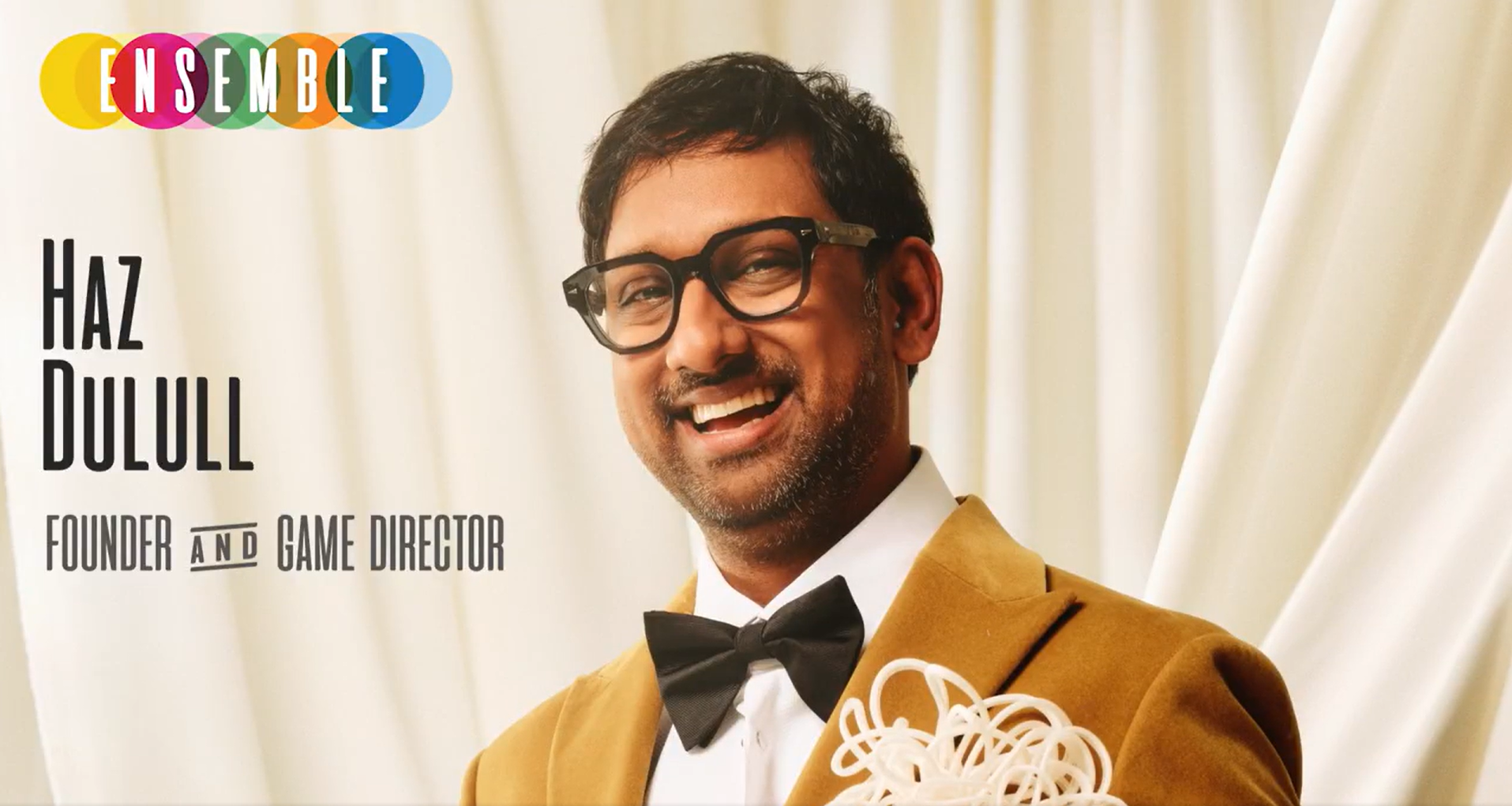
HaZ Dulull is part of the London Games Festival 2026 Ensemble Cohort
Astro Burn by Beyond The Pixels enters Early Access this week. ELO builds and manages communities for game studios, brands, and publishers across Discord, Reddit, and beyond. If you're thinking about what community can do for your game or brand, contact us.